
Reception
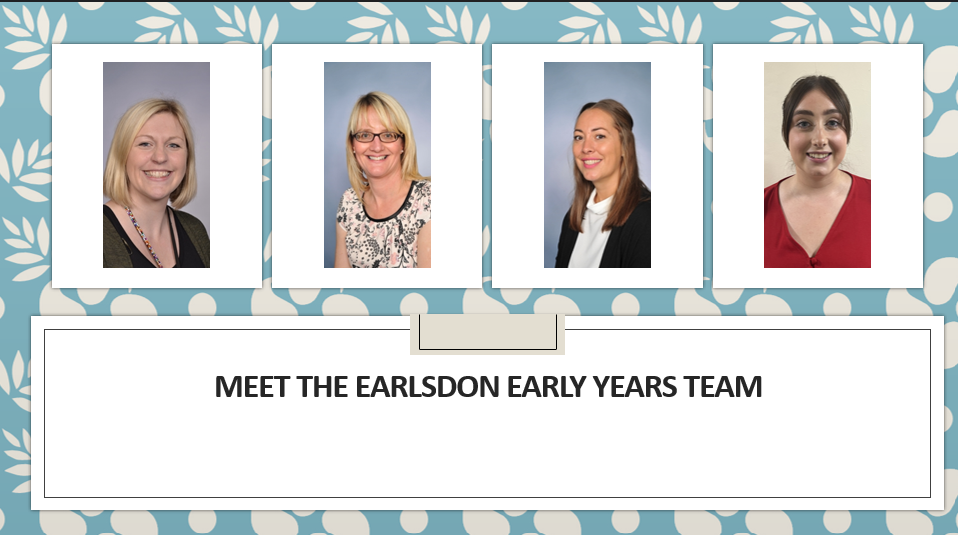
Welcome to our Early Years page! We hope you find the information here helpful for you and your family. On this page, you’ll meet our Early Years Team, explore the learning that takes place, discover our aims, and gain a sense of the atmosphere in our wonderful school.
Reception
Our vision
We want ignite children’s curiosity and love of learning through a rich, engaging environment—indoors and out—where exploration and discovery shape each day. Guided by the Early Years Framework, we want to build strong foundations in early reading, phonics and handwriting while nurturing the whole child through purposeful teaching, meaningful play and warm and supportive partnerships with families
Learning Partnership
At Earlsdon Primary we believe that successful learning is a three-way process between school, your child and you as parents. Your child will best succeed if we all work together as a team. Taking an active interest in their learning and supporting them at home will help build confidence and ownership of their new experiences.
The Aims of our Foundation Stage
- To provide a happy, secure and safe environment in which young children can blossom and grow.
- To encourage parents to become partners with the school in the education of their children.
- To ensure breadth and balance in our teaching and your child’s learning through carefully planned adult input and sensitive interaction using the Early Years Foundation Stage (EYFS) Curriculum and Profile.
- To provide a curriculum firmly based on active, multi-sensory learning to meet the needs of the
individual child.
- To work together to map and assess the progress of developing skills and learning.
- To foster a love of learning, enquiring minds and the ability to discuss, adapt and negotiate.
- To develop children’s self-control, resilience, independence and their ability to respect the feelings, needs and cultures of others.
Examples of classroom provision


Communication, language and literacy are at the heart of our curriculum and we base a lot of learning on rhymes and stories. Building your child’s vocabulary is vital to all areas of their learning, for example we know that a child who reads and shares stories for 20 minutes a day will be exposed to 1,800,000 words in a year compared to a child who reads for 5 minutes each day, who will be exposed to 282,000 words.
Early Maths
The first few years of a child’s life are crucial for developing a strong foundation in mathematics. At Earlsdon Primary, we follow the mastery approach as advocated by the National Centre for the Excellence in Teaching Mathematics.
Our curriculum focuses on six key areas of early mathematical learning, which together provide a solid platform for everything children will encounter as they progress through primary school and beyond.
The Six Main Areas of early maths:
Cardinality and Counting
Developing an understanding that the value of a number represents a quantity, or ‘how many’ objects there are.
Comparison
Learning to compare numbers by understanding which are greater than, less than, or equal to each other.
Composition
Recognising that numbers can be made up of two or more smaller numbers.
Pattern
Identifying and exploring patterns to help children recognise and understand mathematical relationships.
Shape and Space
Understanding how shapes move, fit together, and combine, supporting broader mathematical thinking.
Measures
Comparing attributes such as length, weight, and volume as a foundation for using standard units of measure later on.
We teach maths mastery daily through teacher led sessions and through our adult-led and child-lead activities in our continuous provision both indoors and in our outdoor area. We use the NCETM’s Mastering Number programme for our teacher-led sessions for our number provision (cardinality & counting, comparison and composition). The Mastering Number Programme is designed to enhance children's number sense by developing fluency and flexibility with number facts, ensuring that children leave reception with a solid foundation in mathematics. The programme involves daily teacher- led sessions, professional development for teachers and was praised by Ofsted in the latest mathematics subject report: https://mastering-number-ofsted-report-portrait-final.pdf.
At Earlsdon the number formation we teach follows this format http://www.communication4all.co.uk/Numeracy/Number%20Formation%20Rhyme%20Cards.pdf
Curriculum
We plan our curriculum to assess, build on and enhance the experiences that children bring with them to school. Children starting at Earlsdon Primary will have had a range of different experiences before they arrive; they will have learnt a great deal, particularly from their families and will have varied interests and skills. We use the learning objectives from the Early Years Foundation Stage Curriculum documents to plan our themes and to ensure progression in children’s learning. We acknowledge that children learn in many different ways and therefore plan our activities to deepen their understanding through playing, talking, observing, questioning, experimenting, testing, repeating, reflecting and responding to adults and each other. Play is central to a young child’s learning and development. It encourages communication, co-operation, understanding, friendship and self-motivation and enables children to develop thinking and creative skills. The play activities and games in our Foundation Stage classes have a definite purpose and have been carefully planned and structured. They provide a solid foundation of skills including reading, writing and maths that will lead your child towards the objectives of the Key Stage 1 National Curriculum.


